
The ports of North Jutland are set to play a central role in achieving the 2030 goal for the green transition
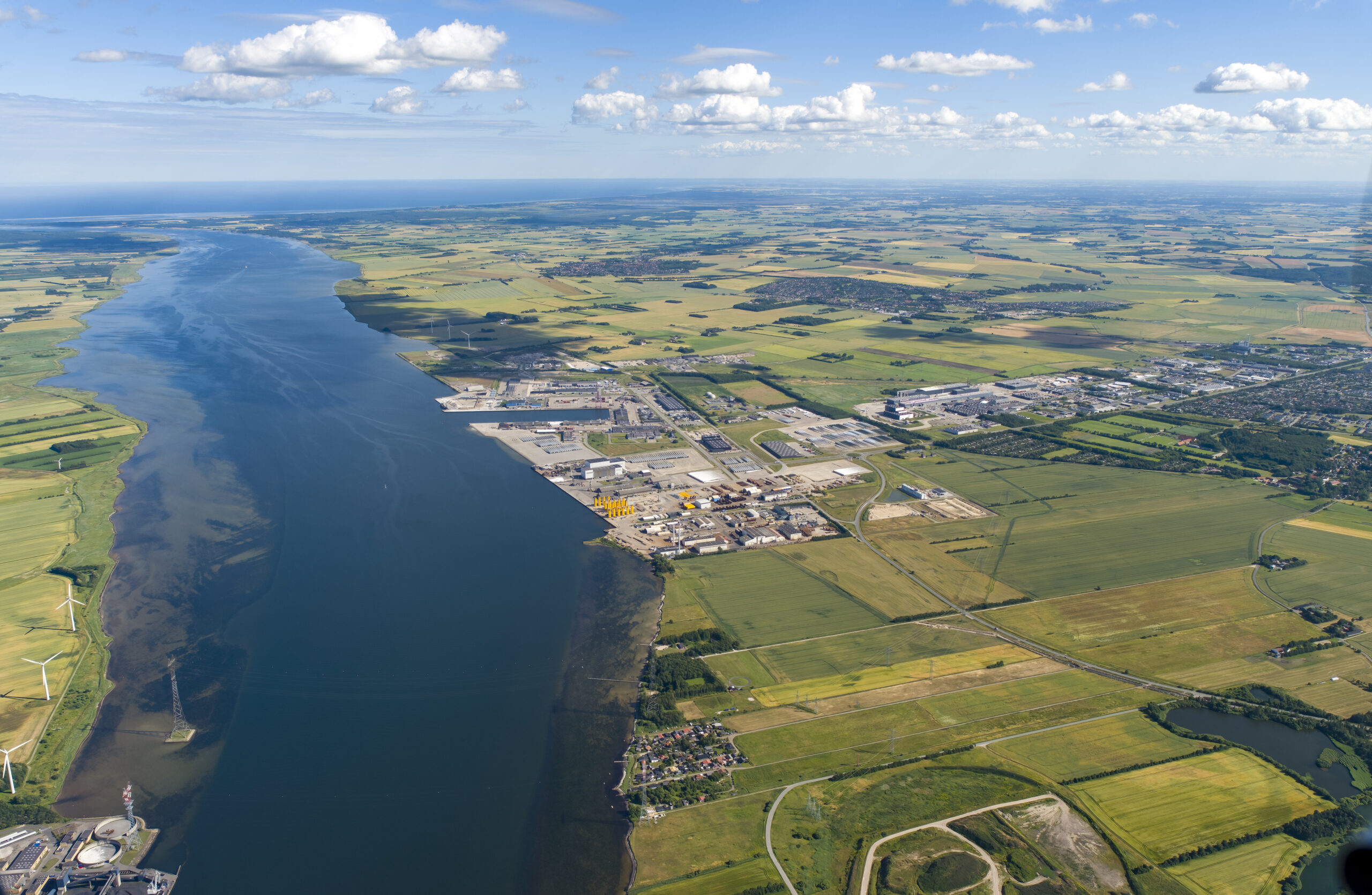
A major analysis has mapped out the potential roles of the five industrial ports in North Jutland in the areas of CO2 capture, utilization, and storage (CCUS), particularly the three ports of Hanstholm, Hirtshals, and the Port of Aalborg, in particular, show great potential and have ambitious goals regarding the CCUS agenda.
The ports of Northern Jutland can play a key role in the loading and unloading of CO2 for storage, as bunkering terminals for green fuels, and as a green growth hub for CCUS.
Download here and dive into the full analysis

Danish ports will play a key role in achieving the government’s 2030 climate goals, with CCUS playing a crucial role. There is a need for new, innovative technologies for carbon dioxide capture, utilization, and storage (CCUS) and the production of new types of synthetic fuels based on renewable energy from wind and solar—commonly referred to as Power-to-X. Ports can become absolutely central to the infrastructure that must be established to achieve well-functioning value chains for viable CCUS and Power-to-X industries.
As a region, North Jutland is in a strong position, as there are favorable conditions for CO2 storage both on land and in the North Sea. In addition, Aalborg University and North Jutland-based companies possess expertise in the development and testing of technologies for the production of green fuels.
The ports in North Jutland have different areas of specialization and complement each other’s strengths; together, they cover the entire spectrum within the three roles on which the analysis is based: CO2 terminal, green refueling station, and green growth center for CCUS.
The Port of Hirtshals Aims to Become a CO2 Hub
In Hirtshals, officials are very pleased with the results of the analysis and emphasize the importance of cooperation among the ports in North Jutland:
“The analysis shows that there is enormous potential in the ports of North Jutland when it comes to CCUS and CCS. It is important that we work together to create the necessary framework conditions so that the ports can become hubs for the new, green industries that will emerge in the coming years,” says Per Holm Nørgaard, director of the Port of Hirtshals.
Hirtshals is ideally located for storing CO2 in the North Sea, and under the umbrella of Greenport Scandinavia—a collaboration involving, among others, the Port of Hirtshals, Aalborg Portland, Ineos, Evida, Wintershall, and Biocarb, the partners are already collaborating on the capture and storage of CO2 starting in 2025. In addition, there are plans for a CO2 pipeline from Aalborg to Hirtshals.
Port of Aalborg is investing in Power-to-X
The Port of Aalborg sees great potential in the CCUS support industry, including a business park and a test center for manufacturers of CCUS technology, components, and related products. In particular, the green fuels of the future play a major role at the Port of Aalborg, which recently welcomed a demonstration facility for the production of, for example, hydrogen and e-methanol. The facility was developed at Aalborg University, and at the Port of Aalborg, it can be scaled up and integrated into a larger test center on the port’s grounds.
At the Port of Aalborg, there is no doubt that North Jutland has a strong position in the CCUS sector:
“This is a sound and thorough analysis of the potential of North Jutland’s ports. It underscores that if we work together across sectors and regions, we in North Jutland are in a strong position where our ports can play a leading role in the green transition.”
We are reassured that it is the right decision to focus on PtX, the green fuels of the future, and CO2 storage. Right now, we are particularly well-positioned to take on the role of a green growth hub for CCUS—this is an area where our partners, in particular, are the most advanced.
“We are home to many green companies working within this agenda, and more are on the way. The analysis provides a good overview of where our shared strengths lie in the region and what we at the Port of Aalborg can offer new and existing companies in particular,” says Kristian Thulesen Dahl, CEO of the Port of Aalborg.
Facts about the analysis
The analysis was prepared by NIRAS on behalf of CO2Vision, a North Jutland business initiative. The analysis provides an overview of the total potential for CCUS at the Ports of Frederikshavn, Hanstholm, Hirtshals, Aalborg, and Skagen, and highlights the roles these ports can play in this context.
Definition of CCUS (
) – A term that describes various methods for capturing CO2, either directly from the emitter or from the atmosphere
– CO2 can be used as an ingredient in the production of synthetic fuels for, for example, airplanes and trucks, as well as for chemicals, building materials, and so on.
– If the CO2 is not used for other purposes, it can be stored in geological reservoirs, either on land or at sea.
– CCUS is currently the only technology capable of delivering significant emissions reductions, particularly in hard-to-abate industries, such as the cement industry.
CO2Vision is the North Jutland business flagship initiative aimed at making North Jutland an international leader in CO2 capture, utilization, transport, and storage by 2030.
CO2Vision consists of various projects and initiatives focused on test and demonstration sites, educational programs, and analyses, with the goal of making North Jutland an international leader in the green industries of the future.
The consortium behind CO2Vision consists of: Aalborg Portland A/S, Aalborg University, UCN University of Applied Sciences, Energy Cluster Denmark, Green Hub Denmark, the Central/Northern Labor Market Office, Evida, the EU Office of Northern Denmark, Business Region North Denmark, and Erhvervshus Nordjylland.
Contact
Mette Høj Ravnborg, Project Manager, CO2Vision, Green Hub Denmark. Phone: 2520 0205
Mette Larsen, Communications Consultant, Green Hub Denmark. Phone: 2520 1568